
Ever slipped off your socks after a long day or a gym session and noticed that red, itchy patch between your toes that just won’t quit? You’re not alone and it’s probably not “just dry skin.” That sneaky culprit is athlete’s foot, and once it crashes the party, it loves to stick around. As someone who’s talked to podiatrists, read the latest studies, and yes, battled a case or two myself after forgetting flip-flops at the pool, I’m passionate about shining a light on this super common issue. It’s not just for athletes (despite the name), and understanding what athlete’s foot is and how it starts can save you weeks of discomfort. Let’s break it down in plain English so you can spot it early, stop it fast, and keep your feet feeling fresh.
What Exactly Is Athlete’s Foot?
Athlete’s foot, medically known as tinea pedis, is a contagious fungal skin infection. It’s caused by the same family of fungi (dermatophytes) that lead to ringworm or jock itch. These tiny organisms love living on dead skin, hair, and nails and they thrive in warm, damp spots.
It usually kicks off between the toes but can spread to the soles, sides, or even up to your nails. The fungus doesn’t care if you’re a weekend warrior or a desk jockey; it just needs the right conditions to move in. Studies show it affects 15–25% of people at any given time, with up to 70% of us dealing with it at some point in life. That’s a lot of itchy toes out there!

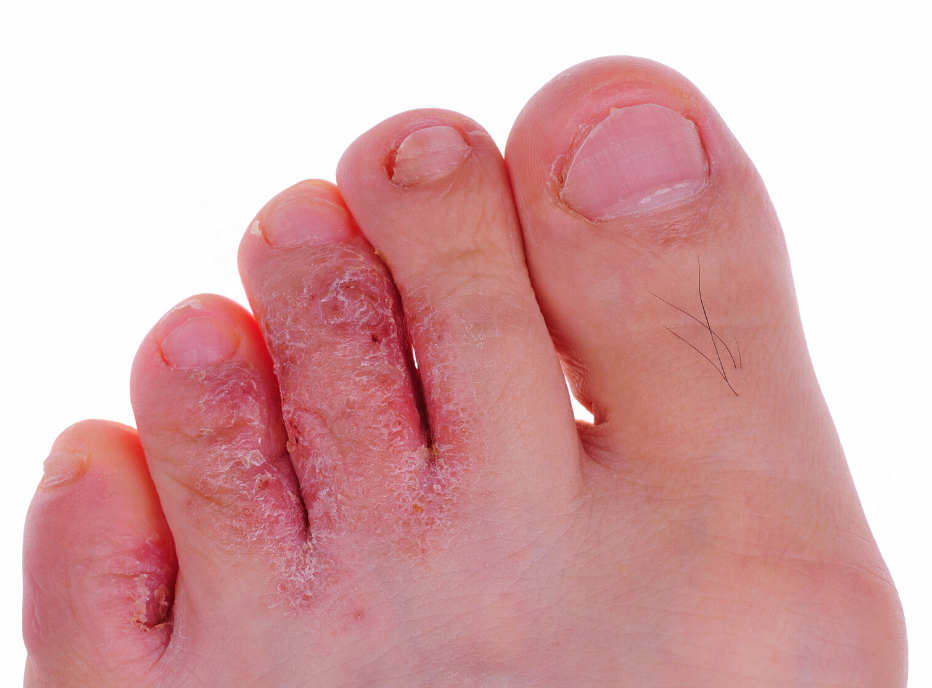
How Does Athlete’s Foot Start? The Sneaky Setup
Here’s the part that surprises most people: athlete’s foot doesn’t just appear out of nowhere. It starts when the fungus meets the perfect environment your warm, sweaty feet trapped in shoes or socks.
The Perfect Storm: Warm + Moist = Fungus Fiesta
The fungi that cause athlete’s foot hang out on damp floors in locker rooms, public showers, pool decks, and even hotel carpets. You pick them up by walking barefoot (or in thin socks) on those surfaces. Once on your skin, they settle in, especially if your feet stay moist all day.
Closed toe shoes, sweaty workouts, or even just hot weather create that cozy, humid home the fungus craves. It feeds on the dead skin between your toes, multiplies, and before you know it, itch city.
Real life example: My friend Sarah thought her “mild rash” after spin class was nothing. She skipped drying between her toes one too many times, and boom, full-blown athlete’s foot that spread to her soles. She learned the hard way: the fungus can live on towels, shoes, and floors for months, ready to reinfect you or jump to someone else.
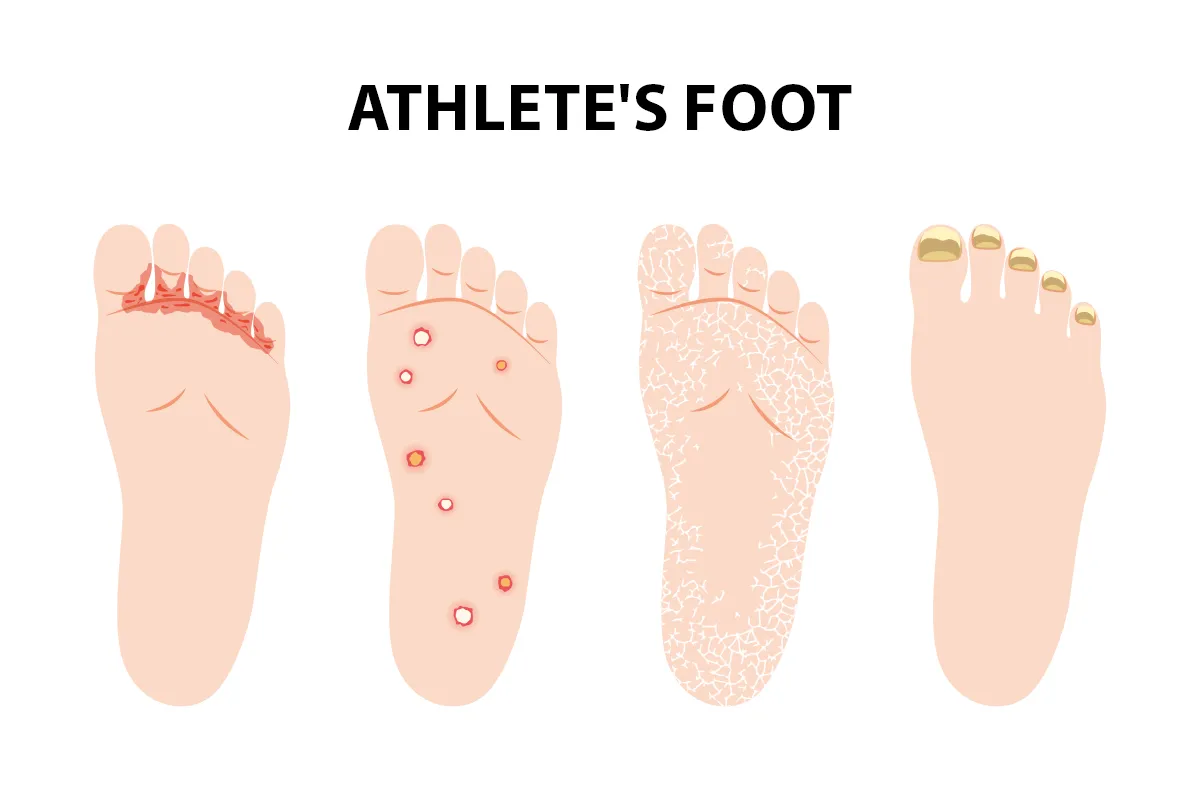
Athlete’s foot symptoms & treatment | Aurora Health Care
Spotting the Early Signs: Don’t Ignore These Clues
Athlete’s foot doesn’t always scream “infection” right away. Early on, it might feel like:
- Itching or burning between the toes (especially the pinky and next toe)
- Red, scaly, or peeling skin
- Cracked or blistered areas that sting
- Dry, flaky skin on the soles (moccasin-type)
- Unpleasant odor or thickened nails if it spreads
If it looks like dry skin or eczema but keeps coming back despite lotion, it’s often athlete’s foot in disguise.
Who’s Most Likely to Get It?
Anyone can catch it, but you’re at higher risk if you:
- Spend time in gyms, pools, or shared showers
- Wear tight or non-breathable shoes
- Sweat a lot (hello, active folks)
- Have diabetes, weakened immunity, or a history of fungal issues
- Walk barefoot in public wet areas
Men and older adults tend to get it more often, but no one is immune.
How to Stop It Before It Starts (and What to Do If It Does)
The best news? Athlete’s foot is super preventable. Simple habits make all the difference:
- Dry your feet thoroughly after every shower, especially between the toes
- Wear breathable socks and rotate shoes so they dry out
- Use flip-flops in locker rooms and pools
- Change socks if they get damp during the day
- Keep feet clean and consider an antifungal powder on sweaty days
If you already have it, over the counter creams work great for most cases. See a doctor if it spreads, won’t clear up, or you have diabetes.

Athlete’s Foot vs. Foot Eczema | FAS The Woodlands
The Takeaway: Your Feet Deserve Better
Athlete’s foot might sound like a minor annoyance, but understanding what it is and how it starts puts you in control. It’s not about being paranoid it’s about giving your hardworking feet the quick, easy care they deserve so you can stay active, confident, and itch free.