
Hey there, friend. If you’re navigating life with diabetes, you know it’s more than just watching your sugar intake—it’s about staying one step ahead of potential complications. Picture this: You’re out for a casual walk, feeling great, but a tiny blister you didn’t notice turns into a full-blown infection overnight. Scary, right? That’s the reality for many folks with diabetes, where poor blood flow and nerve damage can make foot issues sneak up fast. But here’s the good news—you can totally take control. In this guide, we’ll walk through practical, everyday steps to keep your feet happy and infection-free. Trust me, a little routine goes a long way toward avoiding those dreaded hospital visits.
Why Foot Infections Are a Big Deal for People with Diabetes
Let’s get real for a second. Diabetes can mess with your nerves (that’s neuropathy) and circulation, making it harder for your body to heal cuts or fight off bacteria. According to the American Diabetes Association, around 160,000 people with diabetes face amputations each year in the US alone— and a whopping 80% of those are non-traumatic, meaning they stem from preventable issues like infections. Yikes! Studies show that once a foot ulcer develops, the amputation risk can climb as high as 31%. But don’t panic; with consistent care, you can slash those odds dramatically. Think of it as giving your feet the VIP treatment they deserve. Ready to dive in?
Step 1: Make Daily Foot Inspections Your New Habit
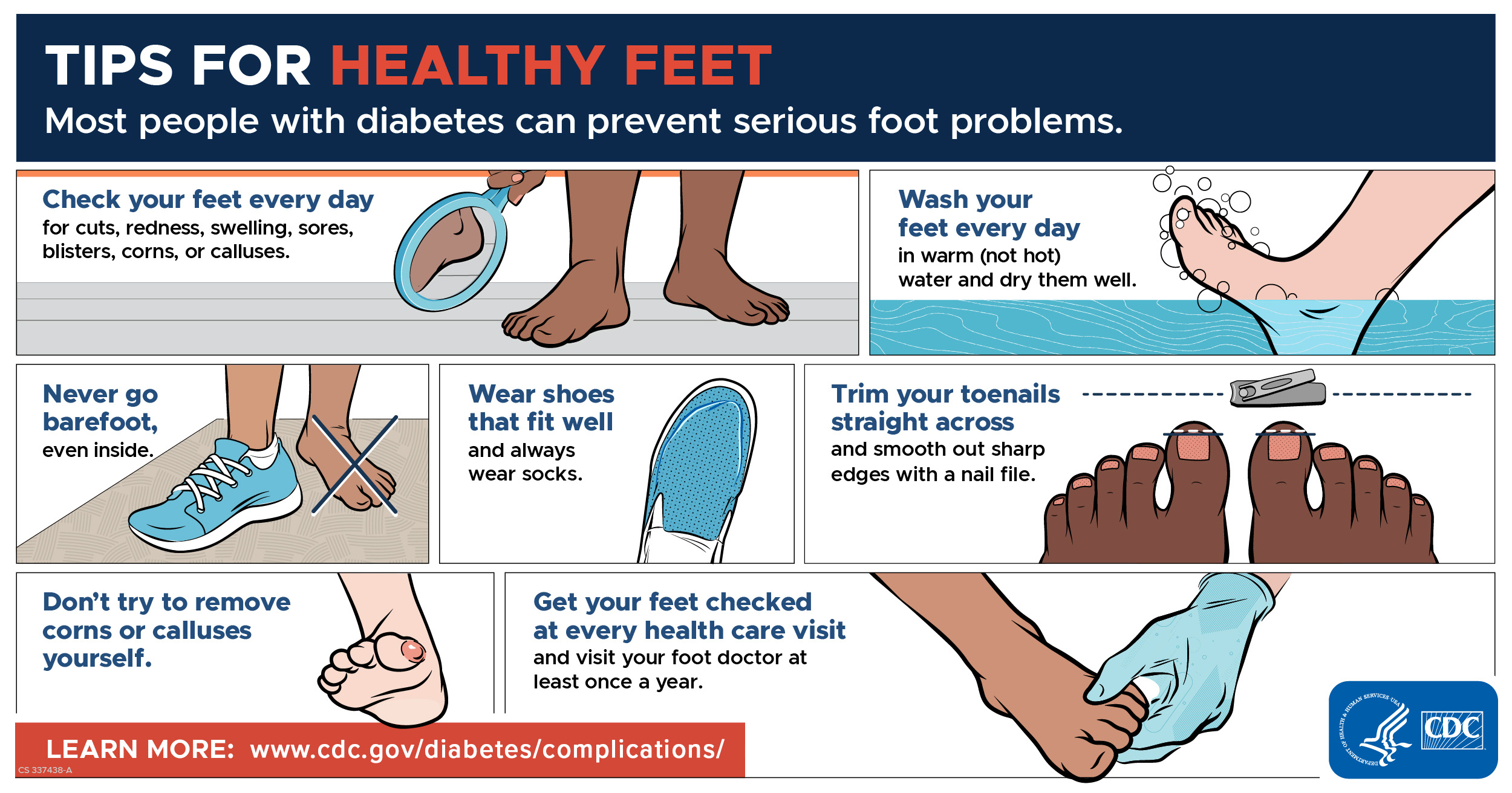
Start simple: Every day, take a good look at your feet. I mean, really inspect them—like you’re checking for hidden treasures (or in this case, avoiding hidden troubles). Sit down after your shower, grab a mirror if needed, and scan for cuts, blisters, redness, swelling, or anything unusual. Even a small crack can invite bacteria, leading to infections.
Why daily? Because early detection is your superpower. If you spot something off, don’t wait—call your doc right away. Pro tip: Do this at the same time each day, maybe while winding down with your favorite podcast, to make it stick. It’s like brushing your teeth; skip it, and problems pile up.
Tips for Healthy Feet Graphic | Diabetes | CDC
Step 2: Master Proper Foot Hygiene
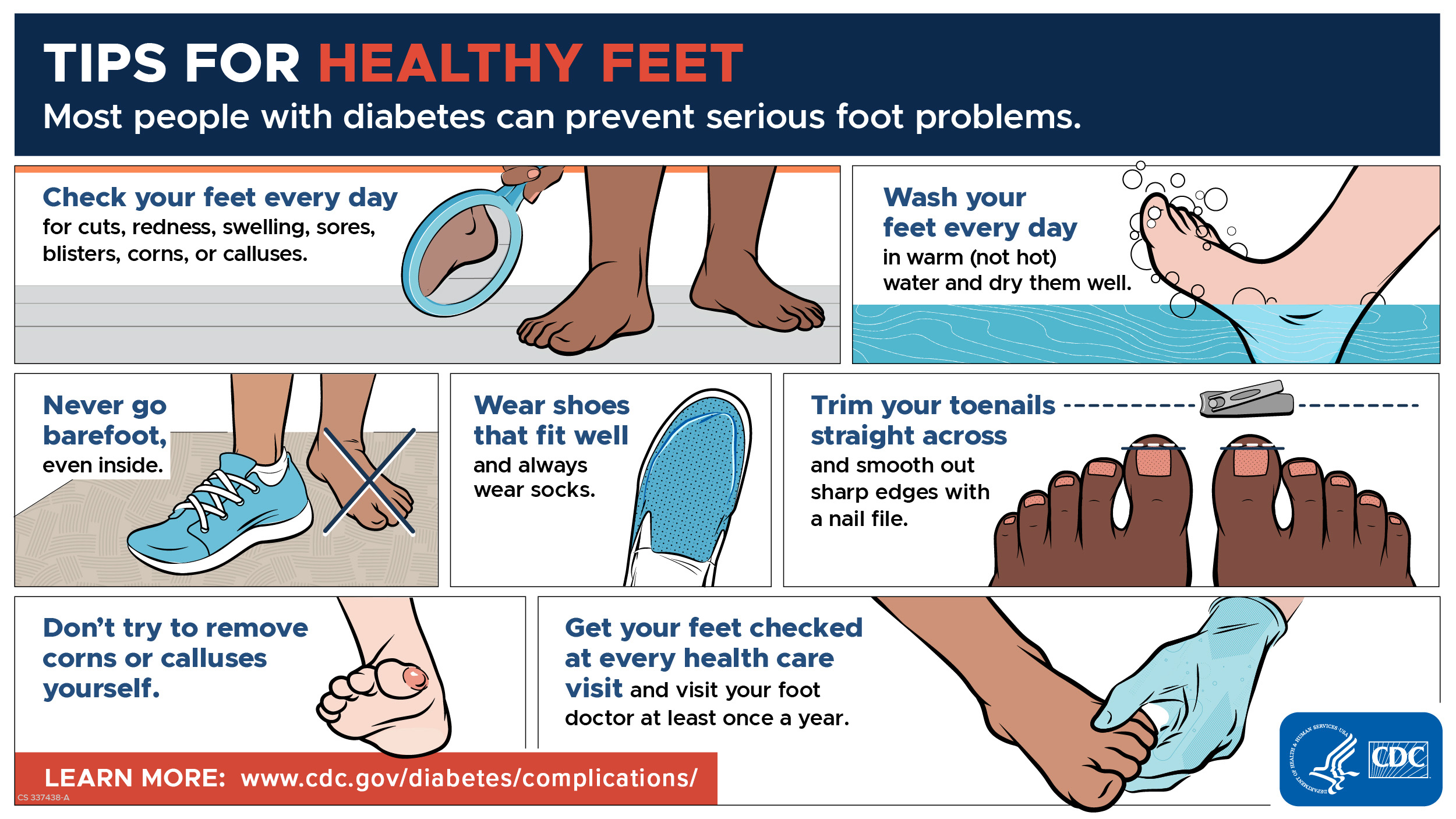
Clean feet are happy feet, but it’s all about doing it right. Wash your feet every day with lukewarm water (test it with your elbow to avoid burns—hot water can numb sensitive skin) and a mild soap. Skip the soaking sessions, as they can dry out your skin and create cracks where infections love to hide.
Gently pat them dry, especially between the toes, to prevent moisture buildup that breeds fungus. It’s a quick ritual, but it keeps bacteria at bay and your skin in top shape. Imagine your feet thanking you with every comfy step!
Tips for Healthy Feet Graphic | Diabetes | CDC
Step 3: Moisturize Like a Pro (But Not Everywhere)
Dry skin? It’s a common diabetes sidekick that can lead to cracks and infections. After drying, slather on a gentle moisturizer—think unscented lotion or petroleum jelly—to keep things smooth. But here’s the key: Avoid putting it between your toes, where extra moisture could spark a fungal party.
Do this daily, and your feet will feel softer and more resilient. It’s like giving them a mini spa treatment without the fancy price tag. Bonus: Healthier skin means better protection against everyday scrapes.
Step 4: Nail Care Done Right
Toenails might seem minor, but ingrown ones can spell trouble. Trim them straight across, not rounded, to prevent them from digging into your skin. Use an emery board to smooth any sharp edges, and if your nails are thick or tricky, let a podiatrist handle it—they’re pros at avoiding mishaps.
Anecdote time: I once heard from a buddy with diabetes who skipped professional help and ended up with a stubborn infection. Lesson learned—better safe than sorry!
Step 5: Choose Footwear That Fits Your Lifestyle
Shoes aren’t just fashion; they’re your feet’s best defense. Never go barefoot, even at home—opt for socks, slippers, or well-fitted shoes to shield against stubs and cuts. Look for moisture-wicking socks to keep things dry, and always check inside your shoes for pebbles or rough spots before slipping them on.
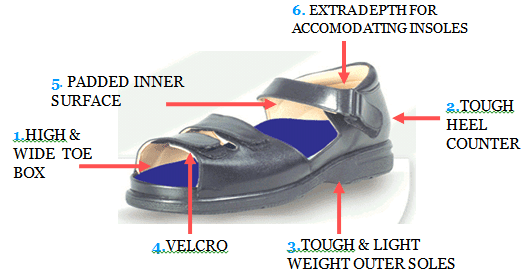
Go for comfy, supportive pairs that don’t pinch or rub—think wide toe boxes and good cushioning. If needed, chat with your doctor about therapeutic shoes or inserts. Walking in the wrong kicks is like driving on bald tires; it might work for a bit, but eventually, it’ll cause issues.
Best Shoes For Diabetics After Foot Surgery – Foot and Ankle Clinic
Step 6: Keep Your Blood Sugar in Check
This one’s foundational: Stable blood sugar levels boost circulation and healing, making infections less likely. Follow your doc’s plan—eat balanced meals, exercise regularly (like gentle walks in those good shoes), and monitor your levels. Better control means stronger defenses against foot woes.
Exercise also pumps up blood flow to your feet, so aim for activities that get you moving without strain. It’s all connected, folks!
Step 7: Schedule Regular Checkups
Don’t go solo—team up with your healthcare pros. Get a foot exam at every diabetes checkup, and see a podiatrist yearly (or more if you have neuropathy). They can spot issues you might miss and offer tailored advice.
If you notice numbness, slow-healing cuts, or changes in foot shape, flag it ASAP. Early intervention can prevent minor problems from escalating.
Extra Tips to Level Up Your Foot Game
- Quit smoking if you do—it hampers blood flow and amps up risks.
- Stay active but listen to your body; avoid walking if you have open sores.
- In cold weather, keep feet warm with socks, but skip heating pads to prevent burns.
- Hydrate well and maintain a healthy weight to support overall circulation.
These aren’t just checkboxes; they’re your roadmap to freedom from foot fears. I’ve seen friends transform their routines and feel more confident tackling daily life.
Wrapping It Up: Step Into a Healthier Tomorrow
There you have it—a straightforward guide to dodging foot infections and keeping diabetes in check. By inspecting daily, cleaning smartly, moisturizing wisely, nailing your nail care, picking the right shoes, controlling sugars, and staying on top of checkups, you’re setting yourself up for success. Remember, those 160,000 annual amputations? They’re largely preventable with habits like these.
What’s one step you’ll try first? Drop a comment below—I’d love to hear your stories or tips. Share this with someone who needs it, and let’s spread the word on foot-smart living. Stay strong, stay vigilant, and keep stepping forward!